Blog / Ed Martin Nissan Service

Blog

All Ed Martin Nissan Service Indianapolis Nissan Dealer Ed Martin Nissan Dealership Ed Martin Nissan Indianapolis New Cars 2025 Models Safety Features Around Town Indianapolis Nissan Service 2024 Model Year Technology Auto Finance Ed Martin Nissan Finance Nissan Rogue 2023 Models Trim Levels 2026 Nissan Models Indianapolis Service Center Nissan Altima Nissan Frontier Nissan Kicks SUV 2026 Nissan Rogue Nissan Armada Nissan Leaf Nissan Sentra Nissan Murano Nissan Pathfinder Nissan Versa 2023 Model 2026 Nissan Armada 2026 Nissan Frontier 2026 Nissan Sentra Indianapolis Used Cars 2026 Nissan Leaf Brake Pads Car Battery Nissan Nissan Titan Air Conditioning Air Filter Repair Catalytic Converter Service Electric Vehicle Nissan Altima in Indianapolis Nissan Ariya Nissan Z Oil Change Tire Replacement Truck 2023 Nissan Pathfinder 2025 Nissan Pathfinder 2026 Nissan Altima 2026 Nissan Kicks 2026 Nissan Pathfinder Electrical System Engine Service Indianapolis Tire Rotation 2025 Nissan Altima 2025 Nissan models Continuously variable transmission Headlights IN News Nissan Maxima Nissan ProPILOT Assist Our Team Value My Trade
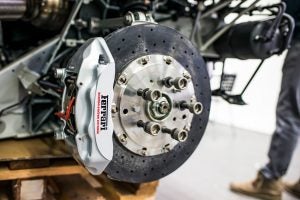
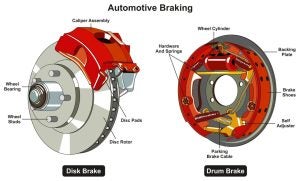
A diagram of a brake pad, as serviced near Indianapolis, Indiana

Does Your Nissan Need New Brake Pads?

Brake pads are an essential part of your braking system, as they generate the friction that brings your wheels to a stop. The pads wear down over time, which increases the time needed for your brakes to engage. As your Nissan dealer, we want to tell you about some of the signs we need to install new pads for you. more Screeching Noises When you hit the brakes, your Nissan should respond almost instantly and your car will come to a stop. The pads are covered by a friction material covering that generates friction against the rotors. Each time you apply the brakes, minute particles of friction material flake off. A new pad has a 1/2" thick covering, and a pad needs to be replaced when it reaches 1/4" thickness. Pad manufacturers install a warning device in each pad to remind you that they need to be replaced. When a pad's material covering drops to 1/4", a metal spike is revealed. This spike will scratch against the smooth surface of the rotor each time you brake, and it produces a loud screeching noise. If you hear this sound when you brake, it's time to visit us for new pads. Glazed Pads A glazed pad is a pad that's been kept in contact with a rotor for an extended period. When you hit the brakes, the brake calipers close on either side of each rotor, and the pads do their work of stopping your car. When you take your foot off the brake, the calipers are withdrawn. A pad can remain in contact with a rotor if it's damaged and doesn't withdraw completely. The pad in a damaged caliper may continue to skim across the surface of its rotor. If this occurs for long enough, the affected pad will develop a smooth and shiny surface. This is known as glazing, and it's dangerous, as a glazed pad can't generate friction anymore. If you have a glazed pad, you could find that your car pulls to one side when you brake. We can easily replace a glazed pad to fix this problem. Increased Stopping Distance If your car seems to be taking longer to stop than it previously did, you could have worn pads. Worn pads produce less friction due to damage and a thinner material covering. The thinner covering also means that the calipers take slightly longer than usual to clamp onto the rotors. This time is measured in seconds, but it can be the difference between a near miss and a collision. Our technicians can easily check the thickness of your pads, and install new ones if your present pads are damaged. If you experience any braking problems, call us right away at Ed Martin Nissan.

2023 Nissan Maxima driving near Indianapolis, IN

A Buyer's Guide to the 2023 Nissan Maxima

When balancing luxurious features and affordability in a mid-sized sedan, Nissan has hit a home run with its Maxima. The latest generation of this beautifully designed car is sure to stun onlookers with its handsome styling while transporting you in exceptional comfort. Here's the lowdown on the 2023 Nissan Maxima! more Performance Definitely one of the Maxima's many highlights, the sedan comes standard with impressive V6 power in the form of a 300-horsepower 3.5L motor that also puts out 261 lb-ft of torque. With the engine being coupled to Nissan's Xtronic continuously variable transmission and its drive mode selector, the drivetrain encourages spirited driving and helps to deliver excellent performance at any speed. At 5.7 seconds, its 0 to 60 time handily outdoes many rivals. The Maxima isn't just fast in a straight line, either. In addition to its stiffened, yet comfortable suspension that enables the car to navigate through corners adeptly, it's also available in the even more performance-oriented SR model. Marked by its unique black V-Motion grille and exterior accenting, the Maxima SR boasts sport-tuned suspension, optimized dampers, and an enlarged front stabilizer bar. Passenger Cabin Step into the Maxima's ultra-modern cabin and you'll be greeted by a beautiful, finely crafted interior that's reminiscent of much more expensive cars from well-known luxury brands. Nissan designers have achieved this by combining a carefully laid out dashboard and controls, exclusive Zero Gravity seats that keep you comfortable and in the perfect driving position, and available features like premium diamond-quilted, semi-aniline leather upholstery. Dual-zone automatic climate control, an 8-way power driver's seat with power lumbar support, and contrast stitching throughout the interior all come standard with every model. Platinum models go the extra mile by adding heated rear seats, maple interior trim with a satin finish, and a fantastic memory system that saves the preferred positioning of the driver's seat, steering wheel, and outside mirrors for two drivers. Infotainment System No matter which trim you choose, your Maxima will come standard with an 8-inch NissanConnect touchscreen system that's complemented by the car's 7-inch Advanced Drive-Assist Display. This handy screen sits in the middle of the instrument panel and provides information ranging from details about the song playing on Bluetooth streaming audio to turn-by-turn directions. Premium audio from Bose's 11-speaker system with Centerpoint 2 technology. Of course, the Maxima's infotainment options include a mobile Wi-Fi hotspot, integration for iOS and Android smartphones, and SiriusXM Traffic and Travel Link support. Unlike its competitors, the Nissan Maxima more than backs up its looks with a premium design and outstanding driving characteristics. Stop by Ed Martin Nissan today and get to know it further with a test drive!

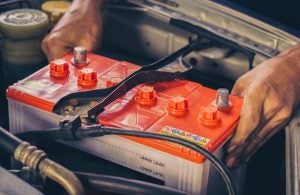
A mechanic changing a car's battery near Indianapolis, Indiana

Does Your Nissan Need a New Car Battery?

Your car battery provides the electrical charge that's essential for cranking and starting your engine. A battery has a relatively limited life of five years or less, and then you'll need a new car battery. As your Nissan dealer, we'd like you to know signs that your battery could be failing and you need to visit us for a replacement. more Corroded Battery Corrosion in a battery is created by the chemicals inside the battery slowly failing. The battery contains several different chemicals, the most important of which is sulfuric acid. These chemicals enable the battery to store electricity as chemical energy. As the chemicals react, they gradually break down, and your battery starts to weaken. Sulfuric acid releases hydrogen gas as it breaks down. Hydrogen gas molecules are small enough to escape the battery and enter the engine compartment. The hydrogen molecules combine with sulfur molecules from the fuel and form hydrogen sulfide. The hydrogen sulfide is drawn back to the battery and will start to corrode the terminals and battery cables. We can't repair a corroding battery, but we can replace it to fix the problem. Slow Starting The battery's most important function is to provide the electricity that starts the engine. When you hit the start button, the battery sends an electrical charge to the starter motor. This charge powers the motor and initiates the crank, and your engine will come to life. Powering the starter motor uses a large percentage of the battery's reserves, which can become a problem for an older battery. As the battery ages, its maximum charging and electrical storage capacity decline. If your engine takes longer to start than usual, you could have a failing battery. The reduced electricity storage means your battery may not have enough power to start the engine immediately. This type of starting difficulty will gradually grow worse until the batter fails. We can replace the battery to fix this problem. Worn Alternator A worn alternator can cause your battery to fail. The alternator is responsible for producing electricity for your car's systems. It does this quietly and efficiently for up to eight years and then will start to fail as its components wear out. A worn alternator steadily produces less electricity until it eventually fails. One of the alternator's tasks is to recharge the battery after the engine starts. A damaged alternator may not supply enough electricity to the battery to replace the power used to start the engine. If this happens, the battery will slowly grow weaker. A failing alternator will cause the check battery and check engine lights to both illuminate. We'll test your alternator and install a new one if necessary. If you experience any battery problems, visit our service department right away at Ed Martin Nissan.

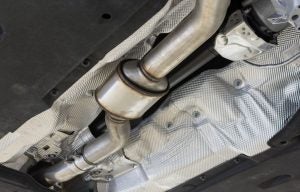
catalytic converter being worked on near indianapolis, indiana

Does Your Nissan Need a New Catalytic Converter?

The catalytic converter on Nissan is designed to remove dangerous products from the combustion process before they exit your car via the exhaust. The converter alters these chemicals into less harmful ones, and this process reduces the amount of pollution the engine generates. If your converter develops a problem, your Nissan dealer can repair or replace it. These are some signs that you have a converter problem. more The Converter Is Blocked The conversion process generates carbon, and carbon can build up and block the converter. If the converter is blocked, exhaust gases can't exit your car. The exhaust gases will be drawn back into your engine, and this increases the fuel concentration and pressure in your engine. A blocked converter is noticeable, as your car will develop starting problems, and produce almost no exhaust smoke. You can test for a blocked converter by placing your hand near the tailpipe and getting someone to rev your engine to around 2,000 RPM. If you feel almost no air from the exhaust, your converter is blocked. Our technicians will examine your converter and clear away the carbon buildup to fix this problem. Damaged Oxygen Sensor Every driver knows approximately how much fuel they use regularly. If you're suddenly using more fuel than you were, this can be a sign of a converter problem. The converter has two oxygen sensors installed in it, one at the entrance to the converter and the other at the exit. These sensors monitor the level of air in the exhaust gases. A damaged converter can lead to the sensor misreporting the level of oxygen in the exhaust gases. Combustion requires more fuel than air, and the damaged sensor means the converter won't supply enough air into the engine. The lack of air will prevent efficient combustion, and your engine will use more fuel until the problem is fixed. We can easily replace a damaged sensor to solve this problem. Black Smoke From the Exhaust Black exhaust smoke can be caused by several unrelated problems, but one of the most common is a damaged converter. The black exhaust smoke will have a strong smell of fuel and other toxic chemicals. This smell is due to the converter failing to convert the residue from combustion in the cylinders. The foul-smelling smoke can also get you a citation for pollution caused by a failed converter. We'll need to examine your converter to find the cause of the problem, and repair or replace it depending on the level of damage. Once the converter is working correctly again, the black smoke will disappear. If your converter is failing, call us right away at Ed Martin Nissan.
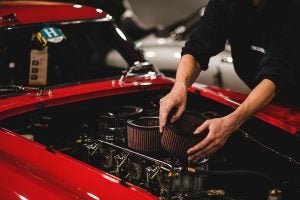
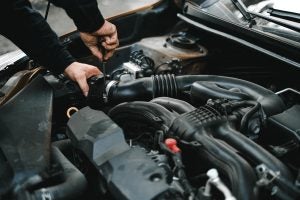
Repairing an air filter near Indianapolis, IN

3 Signs It's Time for a New Car Air Filter

Your car air filter is vital for the smooth running of your engine. This small component makes the difference between efficient and inefficient combustion. The filter traps dirt and other debris, which prevents damage to your engine. In time the filter will be clogged, and you'll need a replacement. Your friendly Nissan dealer in Indianapolis, IN can install a new one for you. These are signs it's time to change the filter. more Strange Engine Noises Air enters your car through the radiator grille and then passes into the air filter. This filter traps dust, so only clean air enters your engine. This is important, as dirt and debris in the air can damage sensitive engine components. Once the air passes through the filter, it arrives in the intake manifold. Fuel mixes with the air and is then injected into the cylinders so combustion can start. A clogged filter prevents enough air from entering the manifold. Combustion requires a 14:1 ratio of air to fuel. Without air, your engine will become fuel rich. The heady, fuel-filled atmosphere makes combustion more difficult. The lack of air hinders effective compression in the cylinders, and your spark plugs will struggle to fire. This causes strange noises like coughing and slurping to come from your engine. The Filter Is Dirty An air filter is one of your car's comments that's easy to check and doesn't require special tools or skills. The air filter is housed in the filter box behind the radiator grille. Its position is listed in your car's manual. If you want to check the condition of the filter yourself, check its position in the manual and then pop the hood. Once you open the filter box, you'll see the filter nestled inside. A good filter is white or cream. As it fills up with dirt, the filter's color will change. If you have a brown or black filter, your engine is suffering. Call our service department, and one of our Nissan-trained technicians will replace the filter for you. A new, clean filter will dramatically increase your engine performance. Strong Fuel Smell As we saw above, your engine requires far more air than fuel for combustion. Combustion will become very inefficient when the filter is blocked, and your engine doesn't have enough air. The spark plugs can't easily ignite in a fuel-rich environment, which means much of the fuel that enters the manifold won't burn. The high fuel concentration in the manifold allows some of the vapors to leak out. This is the strong fuel smell that will waft through your car window. A new filter provides numerous benefits for your car. Call us at Ed Martin Nissan. Image courtesy of Mathias Reding via Pexels

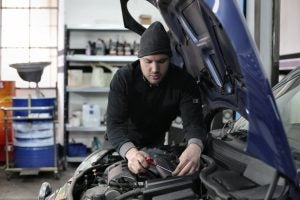
Mechanic working on a Nissan vehicle near Indianapolis, IN

3 Keys to Getting a Quality Collision Repair for Your Nissan

When you need a collision repair, you always have a choice between visiting your dealer or taking your car to a regular repair shop. As your Nissan dealer, we'd like to advise you on some of the keys to a quality and successful repair. more Highly-Trained Technicians Our technicians are extensively trained, and this training continues after they join us. All our technicians undertake advanced training at Nissan as part of their certification for Nissan repairs. Their training is enhanced by additional courses on new Nissan models, technology, and other innovations. Their level of training makes each of our technicians an expert in repairing any vehicle in the Nissan range. A typical mechanic also completes extensive training, but they don't receive advanced training in Nissan vehicles or repairs. These gaps in knowledge can lead to slower repairs, as a regular mechanic isn't as familiar with Nissan vehicles. There is also the possibility that a repair may be incomplete or poorly executed due to a lack of understanding of Nissan cars. High-Quality Parts To achieve the best repair, you need the best possible parts. We only use genuine Nissan parts for this reason. Genuine parts are manufactured in the same factories that built the original parts for your car. These parts have undergone rigorous testing to ensure they meet the highest standards for reliability and safety. A genuine part will also last longer than any substitute. Regular mechanics may use generic parts. These parts are based on genuine parts but designed to fit a wide variety of different makes and models. These parts, however, don't meet the same standards as genuine parts. A generic part won't last as long and may not fit correctly. Warranty With anything you do, it's important to receive a guarantee. This is confirmation something was completed successfully and that any possible problem can be rectified. We provide a guarantee on the standard of our work due to our technician's expertise. In addition, all parts carry a warranty from Nissan. In the very unlikely event of a problem, you know that it will be swiftly rectified. A regular mechanic will offer only a limited warranty if they offer a warranty at all. If the event of a problem, you would need to return to the same repair shop for the repairs. The generic parts used in a repair don't carry a warranty, as they're not specifically designed for your car. If a generic part fails, you may have to pay the full price again for a replacement part. These are only a few reasons to choose your friendly dealer for repairs. Call us today at Ed Martin Nissan. Image courtesy of cottonbro studio via Pexels

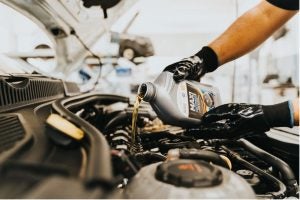
Does My Nissan Need an Oil Change?

A regular Nissan oil change is the best thing you can do for your Altima, Sentra, or Murano. Routine oil changes from the qualified Nissan technicians at Ed Martin Nissan will keep your car reliable and safe. You'll spend less on gas and repairs and drive your Nissan for longer. more Oil Change Intervals If it's been six months since your car's last oil change, it's time to visit your Nissan dealership. Nissan recommends oil changes every 5,000 to 7,500 miles or every six months, depending on your Nissan model, year, and engine type. Routine oil and filter changes are extremely important to keep your engine lubricated, and a new filter prevents dirt and debris from reaching the engine.   Regular oil changes will also ensure your engine runs smoothly and your Nissan lasts longer. Check your Nissan owner's manual for the factory-prescribed oil change intervals or ask your Nissan technician for assistance. Old and Contaminated Oil Clean oil lubricates and protects your engine, but over time and with use, it becomes dirty and contaminated. Old oil doesn't lubricate the parts effectively, causing friction and wear and reducing the life of your engine. Check the oil often and if you notice the oil is not an amber brown but a dark color, visit your Nissan dealership for an oil change. Leaking Oil Various issues can cause oil leaks, from a loose oil filler cap and improperly sealed drain plug to an incorrect filter replacement or deteriorating engine gaskets. Oil leaks that are not addressed immediately can cause immense damage to your engine. If you see oily wet areas around your engine or brown puddles on the ground under your car, schedule a maintenance appointment at your dealership for repairs and an oil change. Tapping and Knocking Noises When the oil is old, or your car is low on oil and the moving engine parts don't get enough lubrication, the friction could cause tapping or knocking noises under the hood. Low oil levels could also cause lifters or cam bearing noise. When you hear these noises, you must get an oil change immediately. The Oil Change or Check Engine Light Another way to tell your Nissan needs new oil is when the oil change or check engine light goes on. When there's not enough oil or a sensor or oil pump malfunction, it will trigger the oil change light. If there's a more severe issue and risk of engine damage, the check engine light will go on. To prevent engine damage, it's crucial to take your car for an inspection and an oil change as soon as possible.   Change your car's oil regularly at the factory-recommended intervals and keep your engine running smoothly and your Nissan on the road longer. Visit Ed Martin Nissan today for an oil change to keep your car in excellent running condition. Image courtesy of Daniel Andraski via Pexels

What to Do When Your Nissan Needs a Radiator Repair

What to Do When Your Nissan Needs a Radiator Repair

Nissan vehicles have a very reliable radiator and engine cooling system. But even the most durable of cars can eventually run into radiator problems, especially without proper maintenance. If your radiator begins to malfunction, your coolant will stop doing its job and your engine will start to overheat. You might sometimes be able to fix radiator issues yourself, but you'll usually need to visit your local Nissan dealer for professional radiator repair. more Signs of Radiator Trouble If your radiator is failing, you're likely to notice signs of your engine overheating. The engine temperature gauge on your dashboard will begin to steadily rise, even under ordinary driving conditions. In addition, your hood will become hot to touch, you'll hear pinging or knocking sounds from the engine, and you might even see smoke or steam coming from under the hood. Keep an Eye on Your Coolant Other indicators of radiator problems become apparent in your coolant fluid. If your ordinarily green or blue coolant has turned a rusty brown or oily color, then you most likely have a build-up of sludge inside your radiator, which is contaminating the coolant. If you notice coolant pooling under your vehicle or your coolant level is persistently and inexplicably falling, then you probably have a leak. Most coolant leaks originate somewhere in the radiator or its hoses. Fixing Your Own Radiator If you're handy with tools and know your way around a car engine, then you might be able to repair your own radiator. If you identify the source of a leak, you may be able to solder the hole to fix it. And if you find a patch of new rust, you should be able to clean it away with a proper cleaning product, as long as the rust hasn't yet begun to cause structural damage. Changing Your Radiator If your radiator is so damaged that it's easier to replace than repair, then it's probably best to have a trusted technician carry out the task. Again, if you're experienced and confident enough with under-the-hood work, you can try to replace it yourself, provided you can find a radiator of just the right size and shape. Taking It to Your Local Nissan Dealer Given how crucial your radiator is to the health of your engine, it's usually worth taking any radiator problems to a professional at your local dealership. They'll likely be the first to identify radiator problems anyway when they check your coolant during your regular car inspections. To thoroughly examine a radiator, a technician must inspect and pressure test the whole cooling system. They'll examine and test your thermostat, fan, radiator cap, hoses, connections, and every other component. They'll then fix any problems they find with the right tools, parts, and know-how. For prompt radiator repair by experienced professionals, pay a visit to Ed Martin Nissan. We're a trusted local dealership that provides a one-stop shop to the region's Nissan drivers with consistently outstanding value and customer service. image courtesy of pexels.com

6 Common Signs Your Nissan Could Use a Brake Repair

6 Common Signs Your Nissan Could Use a Brake Repair

Nissan vehicles are stylish, reliable, and safe. However, as with any other vehicle, you must perform regular maintenance on it to keep it running at its very best. Brakes are just one thing that can wear down over time and will eventually need replacing. So, it's important to know the signs to look for that tell you it's time to head to your Nissan dealer for a brake repair. 6 Common Signs Your Nissan Could Use a Brake Repair more 1. Your Brakes Aren't Working Like They Usually Do Anytime you notice a difference in how your brakes work get them checked immediately. This can mean that you need to press your brakes harder to come to a stop, or your car takes longer to start slowing down when you apply your brakes. Your brake pads are likely worn down and they should be changed before they create more issues. 2. Your Brake Pedal Feels Different When You Push It If your brake pedal feels softer or spongier when you push it this can mean that brake fluid is leaking within your braking system or that your brake pads are worn down too far. Either way, it's important to get your vehicle checked out immediately. 3. Your Brakes Make Noise When You Use Them Hearing a squealing or grinding noise when you apply your brakes means they need attention as soon as possible. This often means your brake pads are worn down quite far. Typically, you can get away with changing only your brake pads at this point, however, waiting may damage more parts of your brakes. 4. Your Brakes Smell When You Use Them If you notice an occasional burning smell coming from your brakes when you've been driving slowly down a large hill or stuck in traffic, this simply means they're overheated. Pull over until they cool down. However, if you notice this burning smell coming from your brakes often, especially if you're not in a situation where your brakes may be overheated, get them checked out immediately. 5. Your Brake Warning Light Is On Your vehicle is designed to warn you of any issues that come up. If your brake warning light comes up or if you have a newer model and get an email or text notification for brake service, this means you need to act as soon as possible before there's more damage. 6. Your Nissan Dealer Tells You to Get New Brakes The mechanic at your dealership will check out all the parts of your brakes during your regular maintenance visits and will let you know when it's time to change any or all parts of your brakes. At Ed Martin Nissan our award-winning team will be happy to help you find your next new or used vehicle. We'll ensure you get the best vehicle for your family, and we will help you maintain it, so you'll be happy for years to come. We'd love for you to stop by or contact us at Ed Martin Nissan today to book your next service appointment, ask any questions, or start your vehicle buying journey. image courtesy of pexels.com

Does Your Nissan Need an Alternator Repair?

Does Your Nissan Need an Alternator Repair?

The alternator is essential to your car. It keeps the battery fully charged and provides power to all the electrical devices in your car. If the alternator starts to fail, it won't charge your battery, and your battery will also die. As your Nissan dealer, we don't want you to be stranded with a dead alternator and battery. These are some of the signs to watch for that you'll need an alternator repair before it fails. Do You Need an Alternator Repair at Your Nissan Dealer? more Headlight Problem One of the signs of a failing alternator is strange behavior by your car's headlights. When you turn on your lights they should maintain a constant beam, but if the alternator is damaged, you can experience dim headlights followed by overly bright headlights. The reason for this is reduced electrical output from the alternator. When an alternator starts to fail, it isn't able to provide as much power as it previously did, but your car's electrical demands remain the same. The reduced electrical output forces the alternator to prioritize power allocation, and this can cause your lights to suddenly dim. To compensate for this, the alternator will shift more power to the lights and they will suddenly grow brighter than they should. The varied power supply will also damage your headlight bulbs and cause them to burn out faster, as the bulbs require a consistent level of power. Difficulty Starting Your Nissan should start as soon as you turn the key. The starter requires a charge from the battery to crank your engine, but the battery only has a limited electrical storage capacity. Your alternator charges the battery when your car is moving and this keeps the battery at full capacity. When an alternator starts to fail, it loses it starts to lose its ability to effectively charge the battery. If your alternator fails, the battery will not be able to recharge and it will start to lose power itself. A slow crank means your battery has an insufficient charge to immediately start your engine, and the most likely cause of this is a damaged alternator. Electrical Problems An electrical issue, for example, a seat heater that fails to come on and then suddenly works properly could just be a random issue. If you notice, however, that peripheral devices in your car are failing for no apparent reason, this may be a sign that your alternator is failing. The alternator supplies the power for all your car's devices, but when it starts to weaken it lacks the power to maintain all of the devices you need. Your alternator will always show signs that it's wearing out, and this gives you time to get a replacement before it fails completely. When your Nissan shows any of these signs, or something just doesn't feel right with your car, call us right away at Ed Martin Nissan. Our specialized mechanics will be happy to check your alternator and give you any information you may need. image courtesy of pexels.com
Transmission Problems? Visit Your Indianapolis Nissan Dealer Today

Transmission Problems? Visit Your Indianapolis Nissan Dealer Today

Your transmission ensures that power from the engine is transferred to the wheels, and the power is varied by means of gears. Transmission problems do not have to be expensive, but as with any mechanical problem, the sooner the problem is diagnosed the easier and cheaper it is to repair. As your Nissan dealer in Indianapolis, IN, we want you to know the signs that your transmission needs to be checked. Transmission Problems? Visit Your Nissan Dealer in Indianapolis, IN Today more Loud Noises A failing transmission can make loud noises as it shifts gears. A rumbling, grinding, or whining sound usually means that you have a transmission problem. You may also notice that gears start to slip. If you hear any unusual sounds from your transmission, we advise bringing your car to our service center so we can examine it. Hot Smell A lack of transmission fluid can cause a hot smell when you shift gears. The fluid acts as a lubricant to protect the gears and other moving parts from damage. If the fluid is low, the metal gears can grind against each other. This not only gives off a hot smell from friction, but it can also result in damage to the teeth of the gears. Leaking Transmission Fluid Transmission fluid acts as a lubricant to protect against friction, and it also acts as a hydraulic fluid to allow the gears to shift. Your transmission operates under hot conditions caused by constantly moving parts, and the fluid helps to reduce the temperature. A pool of transmission fluid under your car is a very visible sign that there is a leak somewhere in the system that needs to be fixed. The leak may be from the reservoir, from a worn or damaged hose, or from damage to the transmission itself. If you notice a transmission leak, we advise contacting us ASAP so that we can find and repair the leak. Topping up the fluid is a short-term solution, but the leak will continue and will grow worse with time. Check Engine Light The check engine light doesn't necessarily mean that you have a transmission problem, but it does warn that there is a problem with your engine. Sensors are placed throughout your engine to monitor performance, and if the system detects a problem the warning light will go on. The system will also display an error code, and we can check this and find the cause of the problem. Ignoring this light can result in more serious damage being done to your engine. Jerking Transmission If you have an automatic transmission, one of the signs that it's failing is a jerking sensation when you shift gears. This difficulty in shifting into gear will become more frequent and serious if it is not fixed. If your Nissan shows any of these signs, call us immediately at Ed Martin Nissan. Our trained and certified technicians will ensure your vehicle is speedily repaired and safely back on the road again ASAP. image courtesy of pexels.com

3 Benefits of Replacing Your Nissan Auto Parts at the Dealership

3 Benefits of Replacing Your Nissan Auto Parts at the Dealership

Car parts are designed to be strong and sturdy, but even the best Nissan auto parts can't last forever. Because of general wear and tear or accidents, parts may break down and need to be replaced. When this happens, you have a choice to make: you can either visit your local Nissan dealer in Indianapolis, IN, or you can get some parts from an independent auto shop instead. This guide will highlight some of the benefits of having parts replaced at the dealership. 1. Official Parts Car parts can be divided into two main categories: original equipment manufacturer (OEM) parts and generic parts. OEM parts are designed by the Nissan brand itself and specially made to fit perfectly in Nissan vehicles, while generic parts are made by third-party companies and designed to fit in lots of different types of cars. more If you go to the dealer, you'll always get OEM parts, and experts agree that OEM parts tend to be longer-lasting and offer the best possible fit. If you head to an independent auto shop, you'll probably have to pay for generic parts, which may not last as long and could cause additional problems with your car in the long term. 2. The Finest Mechanics Replacing car parts isn't always easy. In fact, it can be quite a complex job, requiring a lot of technical skill and know-how, so it makes sense to hire the very best people for the job. At the dealership, you'll find the finest mechanics and true Nissan specialists; these people are highly trained and have years of experience working exclusively with Nissan vehicles. You can also find excellent mechanics at independent auto shops. However, they usually work on lots of different brands and models of cars, so they might not have much experience when it comes to the specifics of the Nissan brand. So, if you want the best levels of service and the most efficient Nissan repairs, it's always best to head to the dealer. 3. Saves You Time and Money Many people worry about the cost of having car parts replaced. It can also be quite a time-consuming process, as you may have to wait a while for the parts to be ordered, and then you might have to cope for some time without your car while the mechanics get to work and install the new parts. If you're looking for the fastest repairs and best value service, the dealer is the place to be. As explained above, dealer mechanics are highly-trained specialists, with access to the very best parts and tools. Thanks to this, they're able to carry out repairs and replacements as quickly and efficiently as possible to get you back on the road without any unnecessary delay. If you head to an independent auto shop, you may have to wait longer for your car to be fixed, and there's a bigger risk of something going wrong, too. As you can see, there are several big benefits to having replacement auto parts fitted at the dealer. So, if your Nissan needs some new parts, don't settle for less than the best. Call Ed Martin Nissan today to schedule part changes and other repairs.   image courtesy of pexels.com

Contact Us

Fill out this form below and we'll contact you shortly
*Required Fields